

My kitchen counter is 28 inches wide. That is not a typo. I have a studio apartment in a 1960s building in Richmond, Virginia, and the stretch of counter between my sink and the edge of the stove is exactly 28 inches. I measured it when I moved in. My name is Carla, and for the first few months I lived there I skipped having a coffee maker entirely because I could not figure out what to sacrifice to fit one. Then I found the Keurig K-Mini, which claims a footprint of just under 5 inches wide. I was skeptical. I bought it anyway. That was just over a year ago, and I have brewed a cup every single weekday morning since.
This review is not based on a week of testing. It is based on roughly 300 real mornings, two descaling cycles, one panicked Google search about a blinking light, and a drawer full of used K-Cup pods I have been meaning to recycle. If you are trying to decide whether the Keurig K-Mini is worth your limited counter space, I have been where you are.
The Quick Verdict
The K-Mini earns its counter spot for solo coffee drinkers who want a fast, reliable cup with zero cleanup, but the ongoing pod cost adds up and the brew temperature runs a little cooler than ideal.
Amazon Check Today's Price →If counter space is what stopped you from owning a coffee maker, the K-Mini is the answer.
At just under 5 inches wide, it is the smallest single-serve machine Keurig makes. Check today's price and see if it is still in stock.
Amazon Check Today's Price on Amazon →How I Have Used It Every Day for a Year
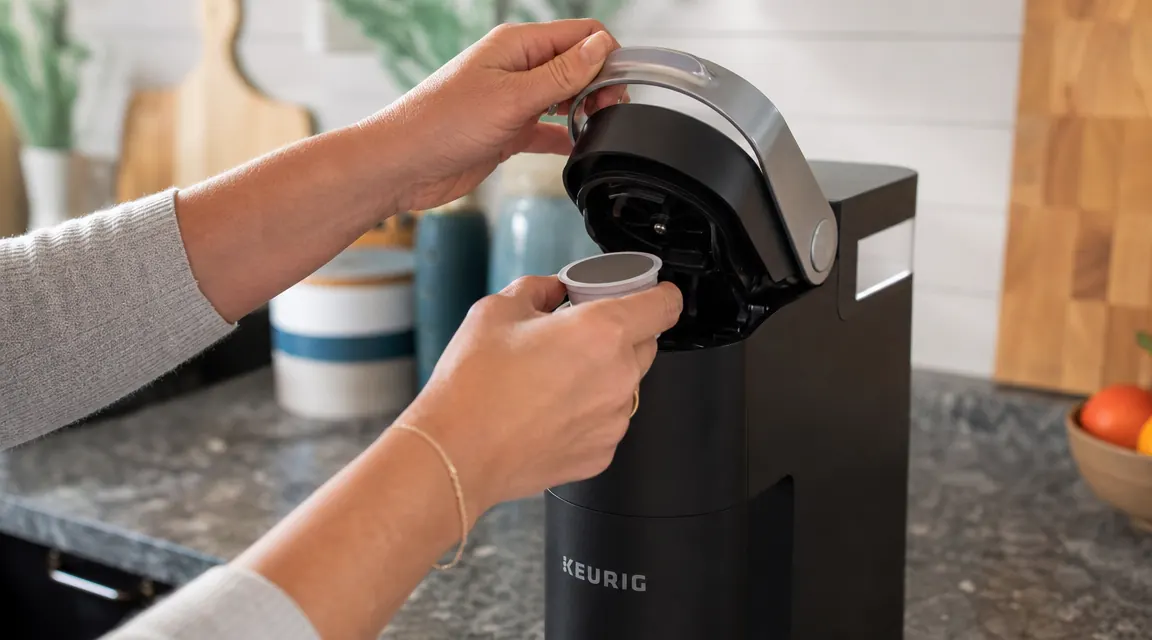
My routine is the same almost every morning. I wake up around 6:15 AM, walk to the kitchen in my socks, fill the K-Mini's reservoir (it holds exactly one cup of water at a time, which I will come back to), drop in a pod, press the brew button, and have a 10-ounce coffee in my hand in about three minutes. I drink one cup of coffee a day, maybe two on weekends. I am not running a household coffee operation. I am feeding a single-person habit.
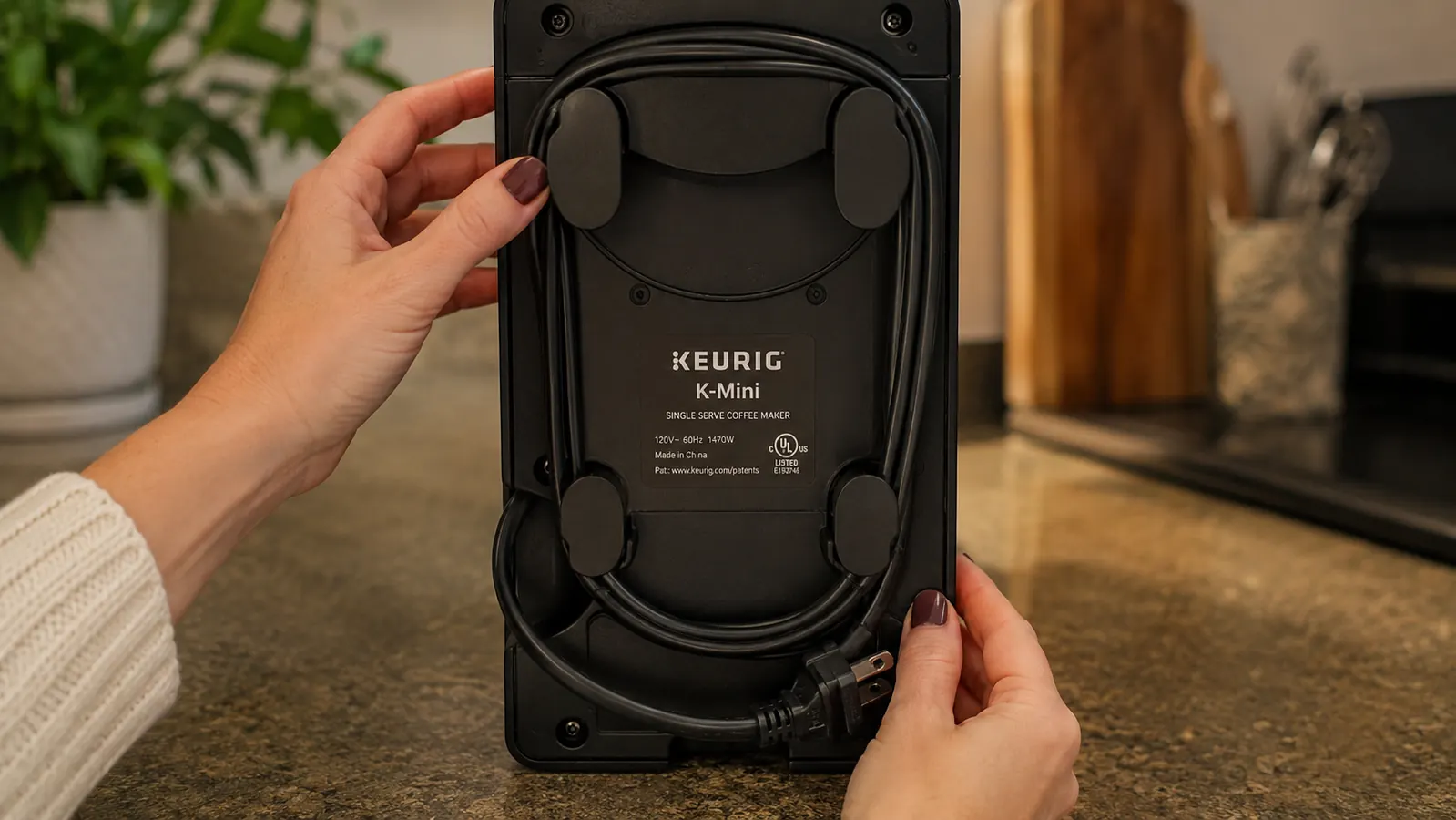
The machine sits on the right side of my counter, butted against the wall. The cord wraps around two small plastic pegs on the back, which keeps the cable from flopping across the counter. That little detail matters more than I expected. In a tight kitchen, a loose cord is an annoyance you deal with every time you move something. The K-Mini's cord storage is not fancy, but it works.
The water reservoir is detachable, which means I fill it at the sink and carry it back to the machine. It holds enough for a single brew, anywhere from 6 to 12 ounces depending on how strong you want your coffee. That fill-every-time workflow is either a small nuisance or a non-issue depending on how you think about it. For me it is a non-issue because I only ever make one cup.
Build Quality and What Held Up After 300 Brews
The K-Mini is mostly plastic and it looks like mostly plastic. The buttons are tactile and have a slight give to them. The lid hinge has a little wobble. The drip tray is a thin piece of matte black plastic that slides out easily but does not feel engineered to last decades. None of that bothered me much because the machine has been completely reliable. It has never failed to brew a cup when I asked it to.
Around month nine I noticed a slight grinding sound during the brewing cycle, louder than it was when new. I ran a descaling cycle using Keurig's descaling solution and a few water-only rinse cycles. The sound went away. I had already done one descaling cycle around month five per the machine's recommendation. In hard-water cities you may need to descale more often. Descaling takes about 30 minutes and is not complicated, but you do need to buy the solution separately. A bottle is inexpensive and handles two to three descaling cycles.
The brew needle that punctures the K-Cup has never clogged. I did give it one cleaning around the six-month mark by inserting a straightened paper clip as the manual suggests. Takes about two minutes. No issues since.
In a 28-inch kitchen, a machine that does one job well and stays out of your way is worth more than a machine that does three jobs and owns your counter.
Brew Quality: What the Coffee Actually Tastes Like
I want to be straight with you about this. The K-Mini brews a decent cup of coffee. It is not an excellent cup of coffee. The brew temperature is a known issue with this machine. True specialty coffee is brewed between 195 and 205 degrees Fahrenheit. The K-Mini brews closer to 187 to 192 degrees on most settings, which means the coffee can taste slightly flat compared to a pour-over or a drip machine with proper temperature control. If you are a coffee person who cares deeply about extraction, this will frustrate you.
If you are a person who wants caffeine in the morning and is not running a cupping session in your studio apartment, the coffee is perfectly fine. I use mid-range pods, mostly from the Green Mountain and Starbucks lines, and I brew at the 10-ounce setting. The result is a solid, drinkable cup that I am happy to start my morning with. The smaller the brew size, the more concentrated and better it tastes, in my experience. If you brew at 12 ounces with a standard-strength pod, it tends to come out thin.
The K-Mini is not compatible with the strong brew feature found on larger Keurig models. You get one button, one brew size selector, and that is it. The simplicity is a feature if you want simplicity. It becomes a limitation if you want to dial in your cup.
The Pod Cost Problem Nobody Talks About Enough
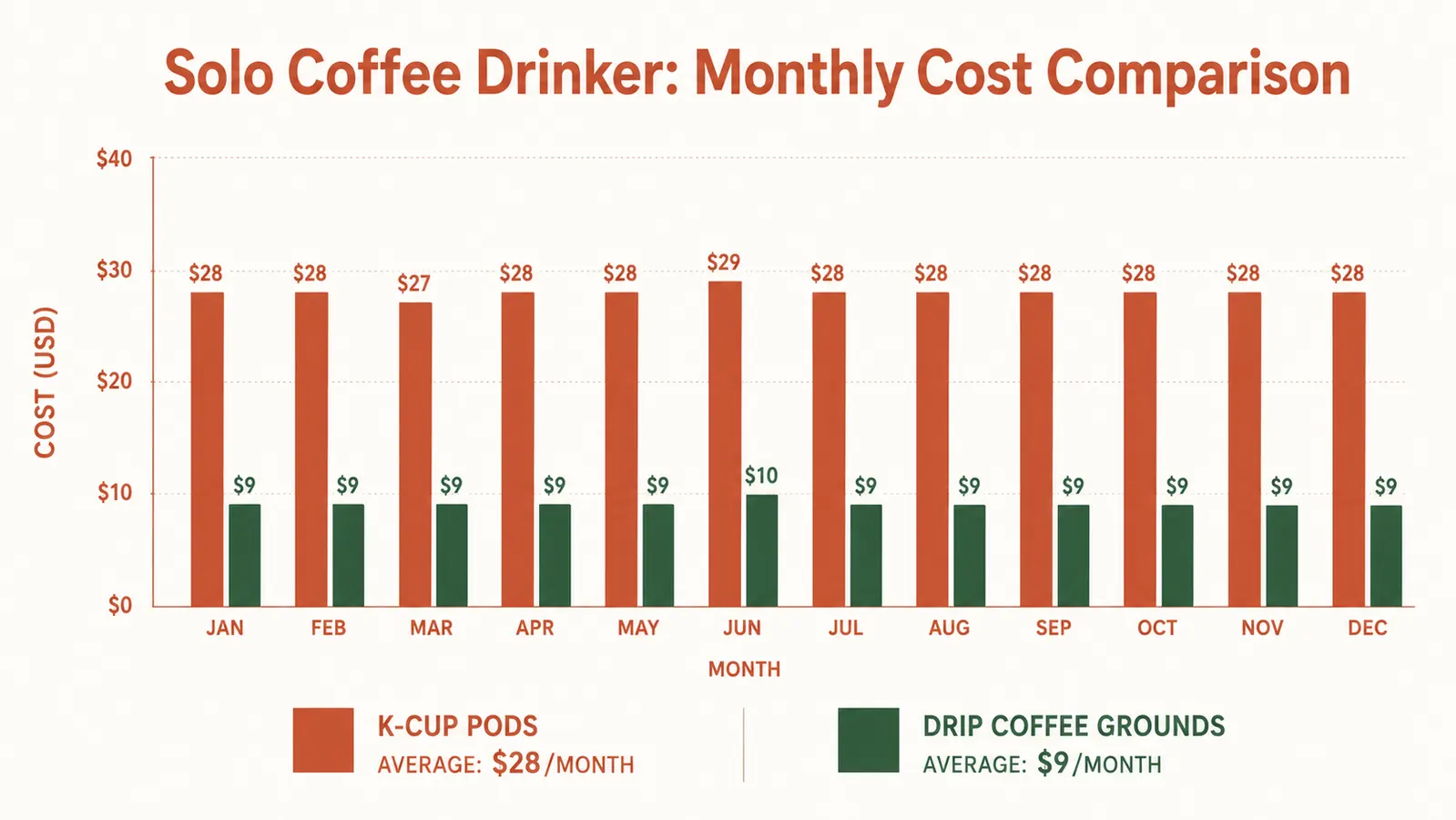
This is the part of the Keurig K-Mini review that I think most people gloss over, and I am not going to. K-Cup pods cost real money. I buy mine in variety packs of 40 to 72 pods and pay moderate per-pod prices. For one cup per day, that is a noticeable monthly cost. For two cups per day it doubles. A bag of quality ground coffee that would make the same number of cups costs a fraction of that.
Over a year, I spent a considerable amount on pods. I spent a modest amount on the machine. That means the machine cost me less than four months of pods. The convenience tax is real. If your budget is tight and you drink more than one cup a day, the pod math may make a drip machine or a simple French press a better financial decision.
You can reduce the cost with a reusable K-Cup filter, which lets you use ground coffee instead of pods. The K-Mini works with universal reusable filters. I tried it for about two weeks. It works, but it adds cleanup and prep time, which defeats part of the reason I bought a K-Mini in the first place. I went back to pods. Your trade-off calculation may be different from mine.
Noise, Speed, and the Things That Surprised Me
The K-Mini is not quiet. During the brew cycle it makes a gurgling, pressurized-water sound that lasts about 30 to 45 seconds and peaks at what I would estimate is around 70 to 75 decibels. In a studio apartment with thin walls and a sleeping partner, this is something to think about. I brew between 6:15 and 6:30 AM. My partner sleeps until 7:30. He has never complained. He also sleeps through alarm clocks, so take that anecdotal data for what it is worth.
Brew speed surprised me in a good way. From the moment I press the button to the moment coffee stops flowing is about 60 seconds once the machine is at temperature. The warm-up time on first brew of the day is about 90 seconds total. For a single cup, that is legitimately fast. Way faster than boiling water for a French press or waiting for a drip machine to cycle through 10 cups you do not need.
Cleanup is nearly nothing. Used pod comes out with the lid, drops in the trash, drip tray wipes off once a week. That is it. For someone living alone in a small space without a dishwasher, the zero-mess factor matters more than I initially gave it credit for.
What I Liked
- Footprint is genuinely tiny at under 5 inches wide, fits where nothing else does
- Reliable across 300-plus brews with no mechanical failures
- Fast: coffee in hand within 90 seconds from cold start
- Cord storage keeps cables from cluttering the counter
- Detachable reservoir is easy to fill and carry
- Minimal cleanup: no carafe, no grounds, no filter basket
Where It Falls Short
- Pod cost adds up fast, especially for two-cup-per-day drinkers
- Brew temperature runs slightly low, which can flatten flavor
- No strong brew option or temperature adjustment
- Reservoir holds only one cup at a time, which is fine for one person but awkward for two
- Plastic construction feels budget-grade compared to the price
- Descaling solution is a separate purchase and easy to forget until the machine protests
How It Compares to What I Tried Before
Before the K-Mini I had a basic drip coffee maker that was about 8 inches wide and 12 inches tall. It made 4 cups at a time. In my kitchen that machine sat on the counter and bumped the cabinet door above it every time I opened that cabinet. I made a full pot, drank one cup, poured the rest down the drain, and repeated that waste three or four times before I gave the machine to a coworker. The K-Mini solved the wasted-coffee problem immediately.
I also tried a Nespresso Essenza Mini for about three weeks on loan from a friend. The Nespresso makes noticeably better coffee because of higher brew pressure and better temperature consistency. But the pods are more expensive and the machine is designed around espresso-style drinks, not a standard American 10-ounce mug. If you want better coffee and are open to cappuccinos and lattes, the Nespresso is worth a look. If you want a simple cup of regular coffee and the pod selection of a major retailer, the Keurig wins. I have a longer head-to-head comparison in my Keurig K-Mini vs Nespresso Essenza Mini comparison if you want to dig into that choice.
Who This Is For
The Keurig K-Mini is the right machine if you live alone or share a small space with someone who has the same coffee needs as you, you drink one or two cups per day and do not want to think much about making them, you have a counter situation that rules out anything wider than about 6 inches, and the cleanup of a traditional coffee maker feels like a chore you do not need. It is also a great fit for dorms, RVs, and anyone downsizing who wants one small machine that handles the morning routine without fuss. If you are deciding between several compact options, I have pulled together 10 reasons single-serve coffee makers make sense for small kitchens that might help you think it through.
Who Should Skip It
Skip the K-Mini if your daily coffee habit is three or more cups and budget matters to you. The pod cost at that volume becomes genuinely expensive compared to drip or French press. Also skip it if you care about coffee quality in a serious way. The brew temperature limitation is real and will bother you. If you have two or more people in your household making coffee at different times, the single-cup reservoir is a minor but persistent friction point. And if you are buying this for an office of more than a couple people, the K-Mini is not designed for that load. Look at the K-Classic or K-Select instead.
One year in, I would buy this machine again without hesitation for my specific situation.
If you are a solo coffee drinker with a tight counter and one cup per day in your future, check the current price. It goes on sale regularly and sometimes drops meaningfully below its typical retail.
Amazon Check Today's Price on Amazon →