
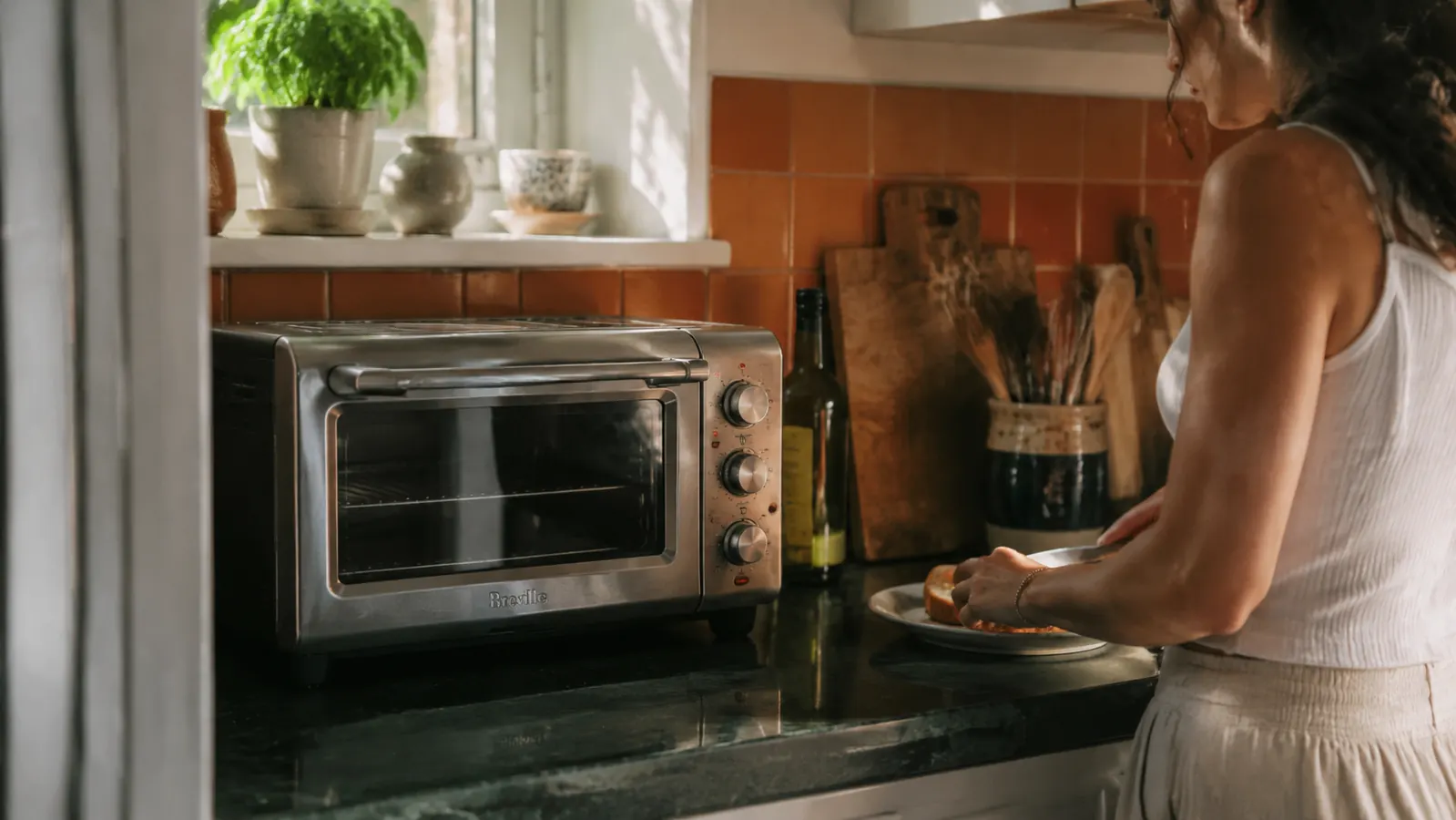
My apartment kitchen has exactly fourteen inches of usable counter space between the stove and the wall. I measured it. For two years I crammed a microwave into that gap and told myself it was fine. It was not fine. I reheated leftovers into sad, rubbery versions of themselves and never once actually cooked anything in it. Then I pulled the microwave out, slid in the BLACK+DECKER TO1313SBD toaster oven, and did not look back. That was eighteen months ago. I have used this machine almost every single day since.
I want to be straight with you: this is not a premium appliance. It is a sub-$60 machine with analog dials and a wire rack that wobbles a little when you pull it out. But for a small kitchen where counter space is currency, what matters most is whether an appliance earns its footprint. The BLACK+DECKER TO1313SBD earns it. Let me walk you through exactly why, and exactly where it will let you down.
The Quick Verdict
A genuinely capable, compact toaster oven for everyday apartment cooking -- honest limitations included.
Amazon Check Today's Price →Your microwave is probably wasting your counter space. This is not.
The BLACK+DECKER TO1313SBD fits in tight spots, handles real cooking tasks, and has 22,000 reviews from people in apartments just like yours. Check current price and availability before it sells out in your preferred color.
Amazon Check Today's Price on Amazon →How I Have Used It
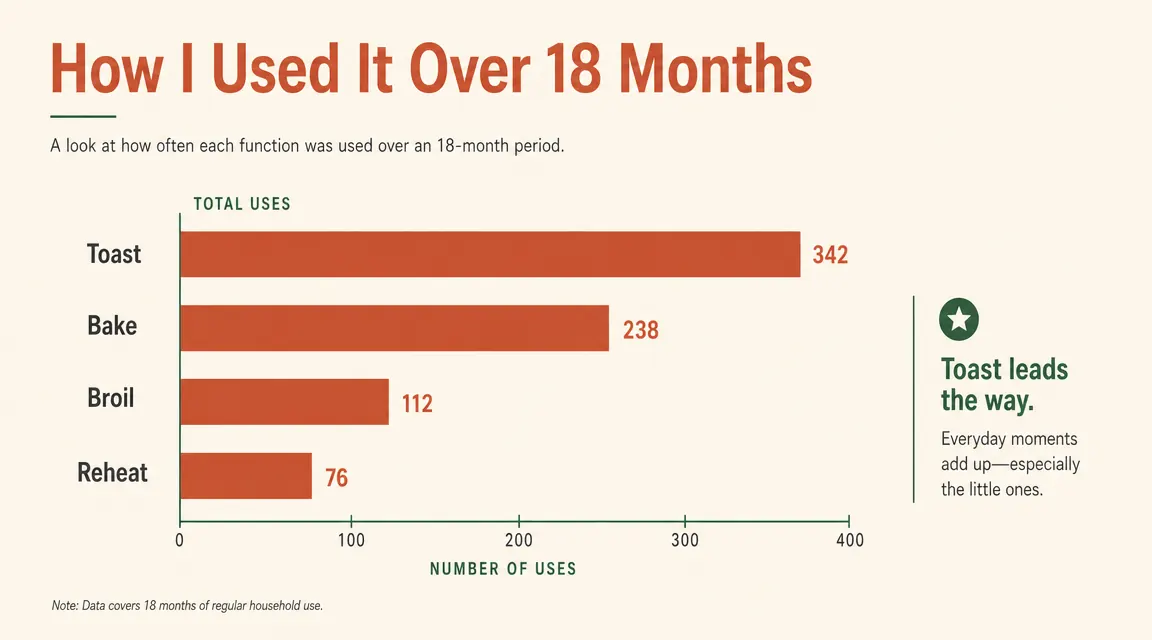
My name is Carla and I live in a 540-square-foot apartment with a galley kitchen. I cook for one, mostly. My setup: a two-burner stove, a half-size fridge, and now this toaster oven sitting exactly where the microwave used to be. I put it through the same tasks week after week: toast in the morning, reheating last night's roasted vegetables at lunch, baking a chicken thigh or two in the evening, and occasionally broiling something with cheese on top.
Over eighteen months I have baked maybe three hundred meals in it. I have toasted easily a thousand slices of bread. I have reheated pizza, fish, rice dishes, and casseroles. I have broiled open-faced sandwiches and melted cheese onto soup crocks. The dial controls feel cheap compared to a digital unit, but I have never once had a problem setting the right temperature or time. Once you learn the feel of the dials, it is actually faster than punching buttons.
The interior is rated for four slices of toast. That is accurate for standard sandwich bread. Anything with a dome shape, a handle, or a lid will not fit. A 9x9 baking dish fits with maybe a quarter inch of clearance on the sides. I do not try to fit a 9x13 in here. That is not what this machine is for.
What the Heating Actually Looks Like
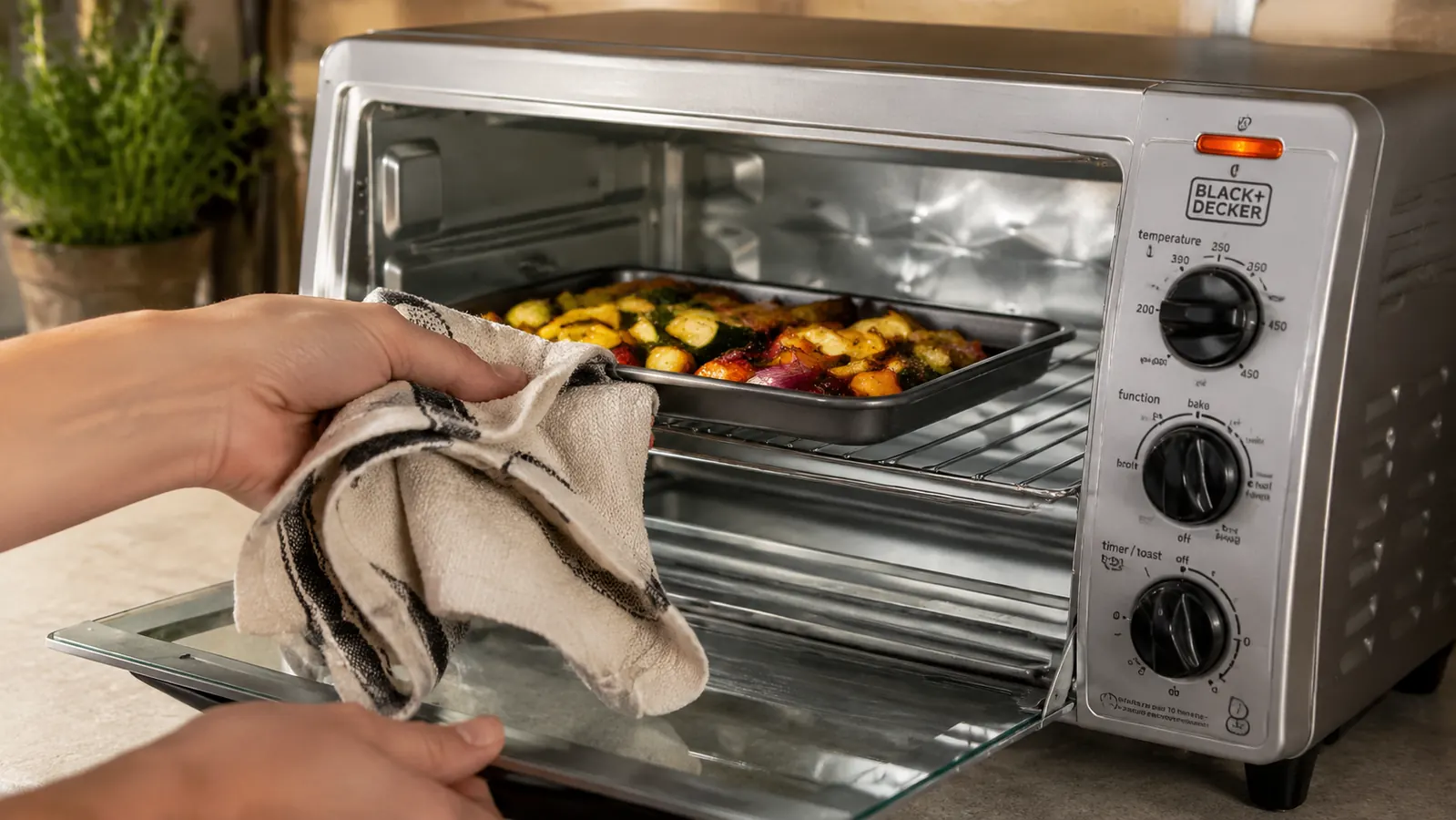
The TO1313SBD runs on 1200 watts with two top heating elements and two bottom heating elements. It does not have a convection fan. That matters. Without a fan, heat distribution is uneven in ways that you will notice with anything that takes more than eight or ten minutes to cook. Cookies baked on the right side of the rack come out darker than those on the left. A sheet of roasted broccoli needs to be rotated halfway through or the back gets charred while the front is still pale.
For toast and reheating, this is basically a non-issue. The heat is even enough for those tasks. But if you plan to bake or roast regularly, plan to rotate. It becomes second nature after a few weeks. I actually think it makes me a better cook because I am paying more attention to what is in the oven instead of just setting a timer and walking away.
Preheat time is around five to six minutes at 400 degrees Fahrenheit. My apartment oven took eighteen minutes. That alone changed my cooking habits. When dinner prep used to mean twenty-plus minutes before anything even started cooking, I would skip the oven and eat something cold or order out. Now I just turn a dial.
My apartment oven took eighteen minutes to preheat. This one takes five. That gap alone changed how often I actually cook dinner.
The Controls and Build Quality
Three dials: function selector, temperature, and timer. The function selector lets you choose between toast, bake, broil, and keep warm. The temperature dial goes from around 200 to 450 degrees Fahrenheit. The timer goes up to 30 minutes, with a permanent-on setting for longer bakes. That is the entire control panel. No digital display, no pre-programmed settings, no Wi-Fi (obviously). If you want a machine with more precision, you will need to spend more.
The exterior is brushed silver with a black trim on the door. It looks like a toaster oven from 2008, which is what it is. I mean that without much complaint. The simple aesthetic blends into almost any kitchen without demanding attention. The door has a small window you can actually see through when the light inside is on, which I appreciate more than I expected.
The crumb tray pulls out from the front for cleaning. After eighteen months I have pulled it out probably sixty or seventy times. It has never warped, cracked, or stopped sliding smoothly. The wire rack does wobble slightly when loaded, which is mildly annoying but has never caused anything to tip over. The interior walls discolor after heavy use, which is normal and does not affect performance. I wipe the inside down with a damp cloth every week or two.
Eighteen Months of Wear: What Still Works, What Changed
The heating elements still work exactly as well as they did on day one. No hot spots have developed that were not there already. The timer ring is slightly looser than it was in month one but still clicks accurately. The door seal is intact. The exterior finish has a few small scratches from pulling it in and out of its spot to clean behind it, but nothing significant.
The one thing that did change: the toast setting runs slightly darker now than it did at first. I drop the setting down one notch from where I started. I am not sure if the elements aged or if my perception of what counts as the right shade shifted. Either way, one notch down and it is fine. Not a dealbreaker, and honestly something I see with most toaster ovens over time.
The included bake pan is thin and warped within the first two months. I replaced it with a quarter-sheet pan from a kitchen store. That is a $10 fix that improves the baking experience noticeably. I would budget for it going in.
What It Does Best and Where It Struggles
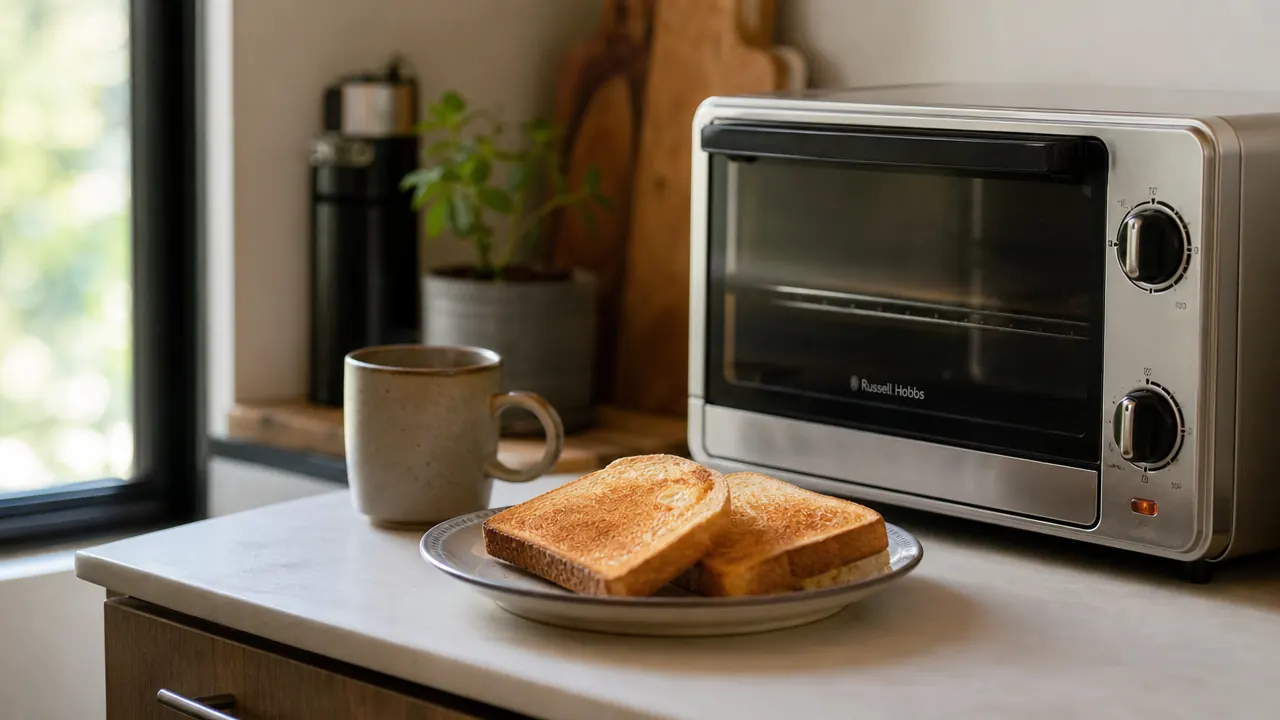
It is genuinely excellent at toast, reheating leftovers (especially things with crispy coatings that would go soggy in a microwave), and simple bakes like salmon fillets, roasted vegetables, and sheet-pan chicken thighs. Pizza reheating is where it absolutely shines. Leftover pizza that comes out of this oven tastes almost as good as fresh. The crust gets crispy again. A microwave cannot do that.
It struggles with anything that requires truly even heat distribution without attention, like baking cookies in a large batch or roasting a full tray of mixed vegetables where different items cook at different rates. It also struggles with thick, dense meats that need sustained heat to cook through without burning the exterior. A pork tenderloin is doable but requires babysitting. A whole chicken is not realistic in this machine.
The keep-warm setting is genuinely useful. I use it to hold plates of food warm while I finish cooking something on the stove. It runs just hot enough to keep food above room temperature without continuing to cook it. At dinner parties for two, it has saved me from the cold-food problem more times than I can count.
What I Liked
- Compact footprint at 15.47 inches wide -- fits most counters where a full oven cannot
- Preheats in 5-6 minutes versus 18+ for a standard apartment oven
- Excellent at toast, pizza reheat, fish fillets, and roasted vegetables
- Simple analog controls that are faster to set than touchpad menus
- Keep-warm setting works well for holding plates while finishing other dishes
- Crumb tray easy to clean and still slides smoothly after 18 months
- Around 22,000 reviews means well-documented behavior across many kitchens
Where It Falls Short
- No convection fan means uneven heating on longer bakes -- rotation required
- Included bake pan is thin and likely to warp within the first few months
- Timer dial only goes to 30 minutes -- longer bakes require the permanent-on setting and separate timing
- Toast darkness drifts slightly darker over time -- plan to adjust the setting
- Wire rack wobbles when loaded -- not dangerous, just slightly annoying
- Interior capacity limits you to 9x9 baking dishes; forget 9x13
How It Compares to Spending More
If you are comparing this to a premium toaster oven like the Cuisinart TOA-60, you are comparing a $60 tool to a $200-plus tool. The Cuisinart has a convection fan, digital controls, more interior space, and a better included rack. It is a meaningfully better machine. But it is also four times the price and 40 percent larger. For a 540-square-foot apartment where counter inches are the real currency, the Cuisinart is often the wrong answer regardless of its superior performance. If you have the space and the budget, it is worth considering. If you do not, the BLACK+DECKER does the job. For more details on how they stack up specifically, see my full comparison of the TO1313SBD versus the Cuisinart TOA-60.
The real comparison is usually between this machine and a microwave in the same footprint. On that comparison, the BLACK+DECKER wins for anyone who actually cooks rather than just reheating. A microwave handles liquids, soups, and frozen single-serving items well. A toaster oven handles everything that benefits from dry heat, which turns out to be most of what I actually want to eat.
Who This Is For
This machine is for the single person or couple in a small apartment who cooks most of their own meals but does not need to cook for a crowd. If you regularly make dinner for two or fewer, bake or roast simple proteins and vegetables, and toast bread most mornings, this covers your needs without wasting counter space or budget. It is also an excellent choice for a dorm room (where allowed), a studio apartment setup, or a camper where a full oven is not practical. If you want to understand all the reasons a toaster oven tends to outperform a full-size oven in these situations, I walked through them all in this article on why a compact toaster oven beats a full oven for small-kitchen cooking.
Who Should Skip It
If you bake cookies, cakes, or bread regularly and care about consistent, even results, this machine will frustrate you. The lack of convection and the uneven heat distribution are real limitations for serious baking. If you cook whole chickens, large roasts, or casseroles that require a 9x13 pan, the interior is simply too small. And if you need digital precision or pre-programmed cooking modes, the analog dials will feel like a step backward. None of these are flaws in the machine -- they are honest limitations of a compact, budget-priced appliance. Know what you actually cook before you decide.
Eighteen months in, I would buy this exact machine again for the same kitchen.
The BLACK+DECKER TO1313SBD still holds the spot where my microwave used to be. It preheats fast, handles real cooking, and fits a tight counter without complaint. Check today's price on Amazon and see if it fits your kitchen the way it fit mine.
Amazon Check Today's Price on Amazon →